Freight exchanges in Europe: the full list

This list names 10 road freight exchanges and freight marketplaces that companies use in Europe. For each one, you see where it is based, who can join, whether shippers can post loads free and whether it checks companies before they join. RNJ Transport uses TIMOCOM, Trans.eu and Cargo.LT to find extra trucks. We took every fact from the platforms’ own websites.
- A freight exchange is an online market where carriers, forwarders and shippers post loads and free trucks. The two companies agree the price directly.
- A freight marketplace for shippers sends a shipper’s loads to selected carriers for prices. The shipper chooses the carrier.
- Pan-European exchanges have users in many countries. Regional exchanges have most of their users in their home country.
- A rating covers one platform only. Before you agree a load, check the carrier’s register entry and EU licence yourself.
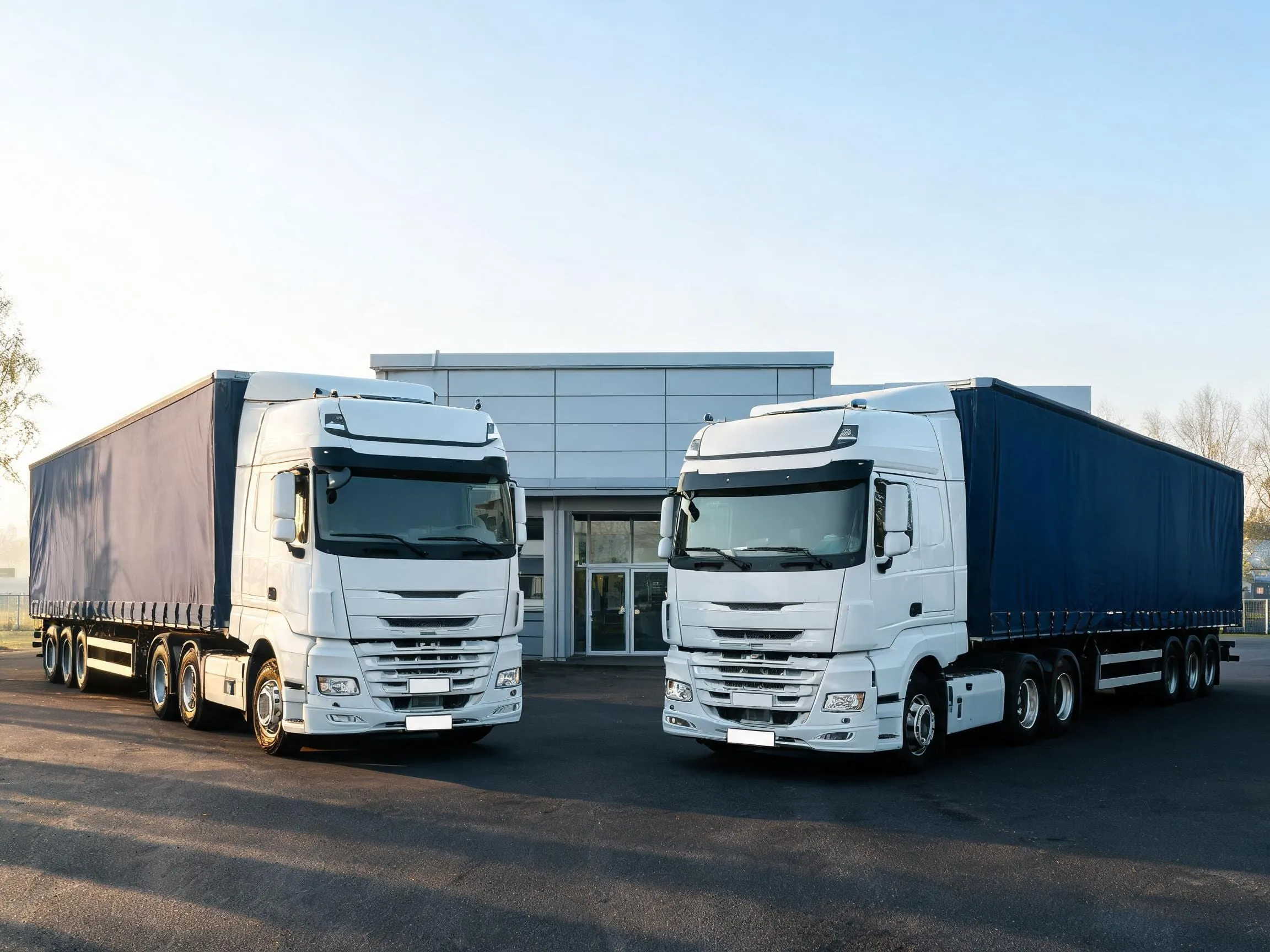
Freight exchanges and marketplaces
The platforms are in three groups, A to Z in each group. The link opens the platform’s own website. No platform pays to be on this list.
Pan-European freight exchanges
Open exchanges with users in many European countries. Carriers and forwarders post loads and free trucks every day.
-
A freight exchange where shippers can post loads free. On the free plan, some details stay hidden, such as carriers’ contact data.
- Who can join
- carriers, forwarders, shippers
- Free for shippers
- Yes, free posting
-
An open freight exchange for carriers and forwarders. Its website says one account also gives access to Wtransnet and 123cargo.
- Who can join
- carriers, forwarders
- TIMOCOM (opens in a new tab) We use it
A freight and vehicle exchange from Germany. Carriers, forwarders and shippers post loads and free trucks across Europe.
- Based in
- Germany
- Who can join
- carriers, forwarders, shippers
- Trans.eu (opens in a new tab) We use it
A freight exchange from Poland where carriers, forwarders and shippers post loads and free trucks across Europe.
- Based in
- Poland
- Who can join
- carriers, forwarders, shippers
Regional freight exchanges
Open exchanges with most of their users in one country or region. They suit companies that run lanes to and from that region.
-
The international name of BursaTransport, a freight exchange from Romania for carriers and forwarders.
- Based in
- Romania
- Who can join
- carriers, forwarders
- Cargo.LT (opens in a new tab) We use it
A Lithuanian freight exchange, online since 1999. Transport companies find loads and trucks to and from the Baltic states and review each other.
- Based in
- Lithuania
- Who can join
- carriers, forwarders
-
A platform made in Ukraine where carriers and forwarders search for loads and trucks.
- Based in
- Ukraine
- Who can join
- carriers, forwarders
-
A freight exchange for Spain and Portugal, with loads between the Iberian Peninsula and the rest of Europe.
- Based in
- Spain
- Who can join
- carriers, forwarders
Freight marketplaces for shippers
Platforms where a shipper sends its loads to carriers for prices, or runs a tender. The shipper chooses the carrier.
-
A platform for shippers from the company behind Trans.eu. Shippers send their loads to carriers and compare the prices.
- Based in
- Poland
- Who can join
- carriers, shippers
-
Transport software and a freight marketplace for shippers. Shippers send loads to carriers for prices, and forwarders can post loads too.
- Based in
- Germany
- Who can join
- carriers, forwarders, shippers
We checked these facts on the platforms’ websites on 24 October 2026. Plans and rules change, so read the platform’s own terms before you register.
Freight exchange and freight marketplace: the difference
A freight exchange is an open market. Carriers, forwarders and shippers post loads and free trucks, and other users reply. The two companies agree the price and the transport order between themselves. The exchange shows the offers, but it does not carry the goods or sign the order.
A freight marketplace for shippers works the other way round. The shipper sends its loads to carriers it selects, or to the carriers on the platform, and receives prices. Many shippers use it for regular lanes under a contract. The shipper still chooses the carrier and signs the order.
Some platforms do both. The group on the list follows what the platform says it mainly does. Our guide on freight exchanges explains how a load moves on an exchange, step by step.
How to choose a freight exchange
Choose a freight exchange by your lanes first. A truck needs loads where it unloads. Search the lanes you run on the platform before you pay. If the platform has a free plan or a free trial, use it for this search.
Then check who can join, the languages of the users on your lanes, and how the platform checks companies. Read the price page on the platform’s own website, because plans change. You can also use two platforms: one pan-European exchange and one regional exchange for your home lanes.
| What you need | What to check |
|---|---|
| Loads on your lanes | Search your lanes on the platform before you pay. Check the countries its users come from. |
| The right partners | Who can join: carriers, forwarders or shippers. On a platform that shippers join, shippers post their own loads. |
| Safe partners | Whether the platform checks companies before they join, and whether profiles show ratings and payment records. |
| Your language | The languages of the platform and of the users on your lanes. |
| Cost | A free plan, a free trial or a subscription. The platform’s own price page has the current price. |
| Work away from the desk | A phone app, so a dispatcher can answer offers and send truck details on the road. |
Before you register on a freight exchange
Most freight exchanges ask for company documents before an account opens. On the exchanges we use, a company sends its registration documents and its licences first. A carrier that carries goods for hire between EU countries needs an EU Community licence (Regulation (EC) No 1072/2009).
Read the terms of use before you post. They say what you may post, how many messages you may send and when the platform can restrict an account. Use a company email address on your own domain, so other users can match it to your company.
-
Pick one or two platforms
Choose by your lanes, the users you need and your language.
-
Try before you pay
Use a free plan or a free trial, if the platform has one, and search your lanes.
-
Prepare the documents
Company register extract, VAT number and, for a carrier, the transport licence.
-
Complete your profile
Company name, address, phone, contact person and the lanes you run.
-
Check every new partner
Register entry, EU licence, insurance certificate and the platform rating.
Freight exchange or forwarder
Use a freight exchange when your team can check carriers, agree prices and follow each truck. Book a forwarder when you want one contact person and one invoice, with the carrier check done for you. Both options can use the same trucks.
RNJ Transport uses freight exchanges regularly to find extra trucks. We check every carrier before every load. We do not give your load to a second company without telling you. Our guide on how to check a freight forwarder lists each check and where to run it.
Checklist before you pay for a freight exchange
Answer each line with yes before you sign a subscription.
- The platform has loads or trucks on the lanes you run, and you searched them yourself.
- The companies you need can join: carriers, forwarders or shippers.
- The platform checks companies before their accounts open.
- Profiles show ratings, reviews or payment records.
- You read the price page and the terms of use on the platform’s own website.
- Your team has time to check each new partner before every first load.
Frequently asked questions
-
Which freight exchanges are there in Europe?
This page lists 10 road freight exchanges and freight marketplaces. The pan-European exchanges on it are TIMOCOM, Trans.eu, Teleroute and Cargopedia. Regional exchanges have most of their users in one country, and freight marketplaces serve shippers with regular loads. Each entry shows where the platform is based and who can join.
-
Which freight exchanges can shippers use for free?
On the day we checked, these platforms said on their own websites that shippers can post loads free or try the service free: Cargopedia. Some free plans hide details, such as contact data. Plans change, so read the platform’s own price page before you register.
-
Which freight exchanges do companies in Lithuania use?
RNJ Transport uses TIMOCOM, Trans.eu and Cargo.LT to find extra trucks. Cargo.LT is based in Lithuania. The other two are pan-European exchanges. The list on this page shows the other platforms, with the country each one is based in.
-
Do I need a licence to join a freight exchange?
Each platform sets its own rules, so read its terms of use. Most ask for company documents before an account opens. A carrier that carries goods for hire between EU countries needs an EU Community licence. A shipper usually registers with its company details.
-
What is the difference between a freight exchange and a freight marketplace?
On a freight exchange, carriers, forwarders and shippers post loads and free trucks, and the two companies agree the price directly. On a freight marketplace for shippers, a shipper sends its loads to selected carriers for prices, often for regular lanes. In both cases, the company that orders the transport chooses the carrier.
-
Does RNJ Transport use freight exchanges?
Yes. We use TIMOCOM, Trans.eu and Cargo.LT regularly to find extra trucks. We check every carrier before every load, and we do not give your load to a second company without telling you. You keep one contact person and get one invoice. Send us the route, the date and the load size in the request form.
Sources (11)
- IRU, Guidelines for the safe use of freight exchanges, Geneva, 7 November 2013
- TIMOCOM, timocom.com
- Trans.eu, trans.eu
- Teleroute, teleroute.com
- Cargopedia, cargopedia.net/faq
- Cargo.LT, cargo.lt
- 123cargo, 123cargo.eu
- Wtransnet, wtransnet.com
- Lardi-Trans, lardi-trans.com
- Transporeon, transporeon.com
- CargoON, cargoon.eu
We checked these sources on 24 October 2026.
Book a checked truck with one contact person
Send the route, the date and the load size in the request form. We call you back. You can also call us during working hours. We find and check the truck, and you get one invoice.
+370 698 38573A person in our Klaipėda office answers your call.
Mon–Fri 08:00–17:00, Lithuanian time
Transport request
Send us an email. Please include these details:
- Loading and unloading place
- Cargo: type, pallets or loading metres, weight
- Loading date
- Company name
- Your phone number