Road freight tender: how to ask forwarders for lane prices

RNJ Transport, a road freight and forwarding company in Klaipėda, explains how to run a tender for your regular lanes. List last year’s loads by lane. Send every forwarder the same table with volumes, equipment, loading times and price terms. Score the offers, test new forwarders, then give each lane a main and a backup forwarder.
- A lane tender works when every forwarder gets the same table for each lane: places with postcodes, goods, pallets or loading metres, weight, loads per month, equipment, loading hours and price terms.
- In interim Ti survey figures (26 March 2026), nearly 44% of respondents rely mainly on preferred-supplier lists for freight capacity, and 30% on traditional tenders.
- From 1 January 2027, Lithuania replaces vignettes with Via Toll, a charge per kilometre on toll roads of state importance (Via Lietuva). Lane prices for 2027 should say how they cover it.
- Under EU Directive 2011/7/EU, a payment term between companies is at most 60 calendar days, unless the contract expressly agrees a longer term and it is not grossly unfair to the creditor.
When to run a lane price review
Run a lane price review before your annual transport agreements end, so new prices are ready when the next period starts. Many companies review their lanes in the fourth quarter, with new prices from January. Also review a lane when you open a new one, when the volume changes a lot, or when road charges on the route change.
Yearly cycle
A lane price review in five steps
How a company with regular lanes chooses a main and a backup forwarder for each lane.
-
Lane list
Last year’s loads per lane and per month, with the busy weeks marked.
-
Request
One table per lane, the same for every forwarder, with one reply date.
-
Score and test
Every offer scored line by line, then a test load with each new forwarder.
-
Award
A main and a backup forwarder for each lane, with the terms in writing.
-
Review
After the first months: volume against plan, accepted loads, documents and price terms.
Many companies run the review in the fourth quarter, so the new prices start in January.
Tenders are a common way to buy freight. In interim Ti survey figures (26 March 2026), nearly 44% of respondents rely mainly on preferred-supplier lists for freight capacity, and 30% on traditional tenders. The respondents are shippers, retailers, manufacturers and other cargo owners, and the survey covers freight in general, not only road freight.
Two road charges matter for lanes to and from the Netherlands and Lithuania. Since 1 July 2026, the Netherlands charges trucks over 3.5 tonnes per kilometre on almost all motorways and some provincial and municipal roads. From 1 January 2027, Lithuania’s Via Toll replaces vignettes with a charge per kilometre on toll roads of state importance. Ask every forwarder how its lane price covers both. Our posts on Via Toll and the Dutch truck toll give the rates.
Request pack for a lane tender
A request pack gives every forwarder the same facts and the same rules. It has a short cover letter, one table per lane, the offer format and the dates. A forwarder can price only what it reads, so every lane needs its own volumes, equipment and loading times. The template at the end of this guide is the table for one lane.
Build the lane list from last year’s transport orders or invoices. Put loads with the same loading area and the same delivery area into one lane. Count the loads per month and mark the busy weeks. A forwarder plans its trucks from these numbers, so a realistic forecast helps the price hold through the year.
Send the pack to every forwarder on your list on the same day. Answer every question in writing and send the answer to all forwarders, so every offer rests on the same facts. Mark the lanes with part loads. Some forwarders quote only full truckloads, and RNJ Transport is one of them.
| Part | What to write |
|---|---|
| Cover letter | Your company, the goods, the period the prices are for and the start date |
| Lane table | One table for each lane, as in the template at the end of this guide |
| Offer format | A price per load for each lane in EUR without VAT, and every extra charge on its own line |
| Questions | One contact person and the last day for questions. One written answer goes to every forwarder |
| Reply date | The day and time the offers are due |
| Award date | The day you tell every forwarder the result, and the date of the first load at the new price |
| Documents from the forwarder | Company registration, transport licence, liability insurance certificate and order terms, as in our guide to checking a freight forwarder |
Price terms that hold for the agreement period
A lane price holds when the terms around it are clear. State how long the price must stay valid, for which volume, and what happens when the diesel price or a road charge changes. Ask for the waiting time and the payment term in the same offer. A forwarder can then keep its price when one month differs from the plan.
Ask every forwarder to answer each term below in writing, in the lane table. A term that is missing from an offer is a question to ask before you score it.
- Validity: the period the price is for, for example a calendar year, and the date when either side can ask for a review.
- Volume: the loads per month the price is for, and what happens when you send fewer or more loads.
- Fuel: a fixed price, or a diesel clause with a reference price, a fuel share and a price source. Our fuel surcharge calculator shows what such a clause adds.
- Road charges: how the price covers a new or changed toll, such as Via Toll in Lithuania from 1 January 2027.
- Waiting time: the free hours at loading and at delivery, and the price of each extra hour.
- Payment term: the price depends on it. Under EU Directive 2011/7/EU, a payment term between companies is at most 60 calendar days, unless the contract expressly agrees a longer term and it is not grossly unfair to the creditor.
Scoring the offers and the test load
Score every offer with the same table, and set the weight of each line before you open the offers. The price per load counts, and so do the price terms, the service and the documents. Our guide to choosing a freight forwarder shows how to compare price lines like for like. This guide adds the score for each lane.
Give each line 0, 1 or 2 points: 2 when the offer meets the line in full, 1 when it meets it in part, and 0 when the line is missing. Multiply the points by the weight you set. Score each lane on its own, because one forwarder can be strong on one lane and weaker on another.
Before you award a lane to a forwarder you have not used, book one test load on that lane. Score it with the scorecard in our guide to choosing a freight forwarder: loading and delivery times, truck details, notice of changes, the signed CMR copy and the invoice. Add the result to the last line of the table.
| What to score | What to check | 2 points when |
|---|---|---|
| Price per load | The total with every extra line added | Among the lowest totals for the lane |
| Price terms | Validity, volume, diesel clause, road charges and waiting time | Every term in writing, as you asked |
| Payment term | Days from the invoice date | The term you asked for |
| Equipment | Trailer type and loading method | Matches the lane table |
| Experience on the lane | How often the forwarder runs this lane, and with which goods | Regular loads on the lane |
| Contact and orders | One contact person, a backup, and how orders and changes are sent | A named person and a written routine |
| Documents and invoice | Signed CMR copy and invoice after delivery | Within the agreed days, one invoice per load |
| Test load | The scorecard after the test load | On time, with the documents as agreed |
Main and backup forwarder for each lane
Award each lane to a main forwarder and a backup forwarder. The main forwarder gets most of the loads and plans trucks for your volume. The backup forwarder gets some loads every month, so it knows your goods, docks and documents. When the main forwarder has no free truck, the backup takes the load at its agreed price.
Confirm the award for each lane in writing. Also tell the forwarders you did not choose, with a short thank you and the date of the next review. The written award covers the points below.
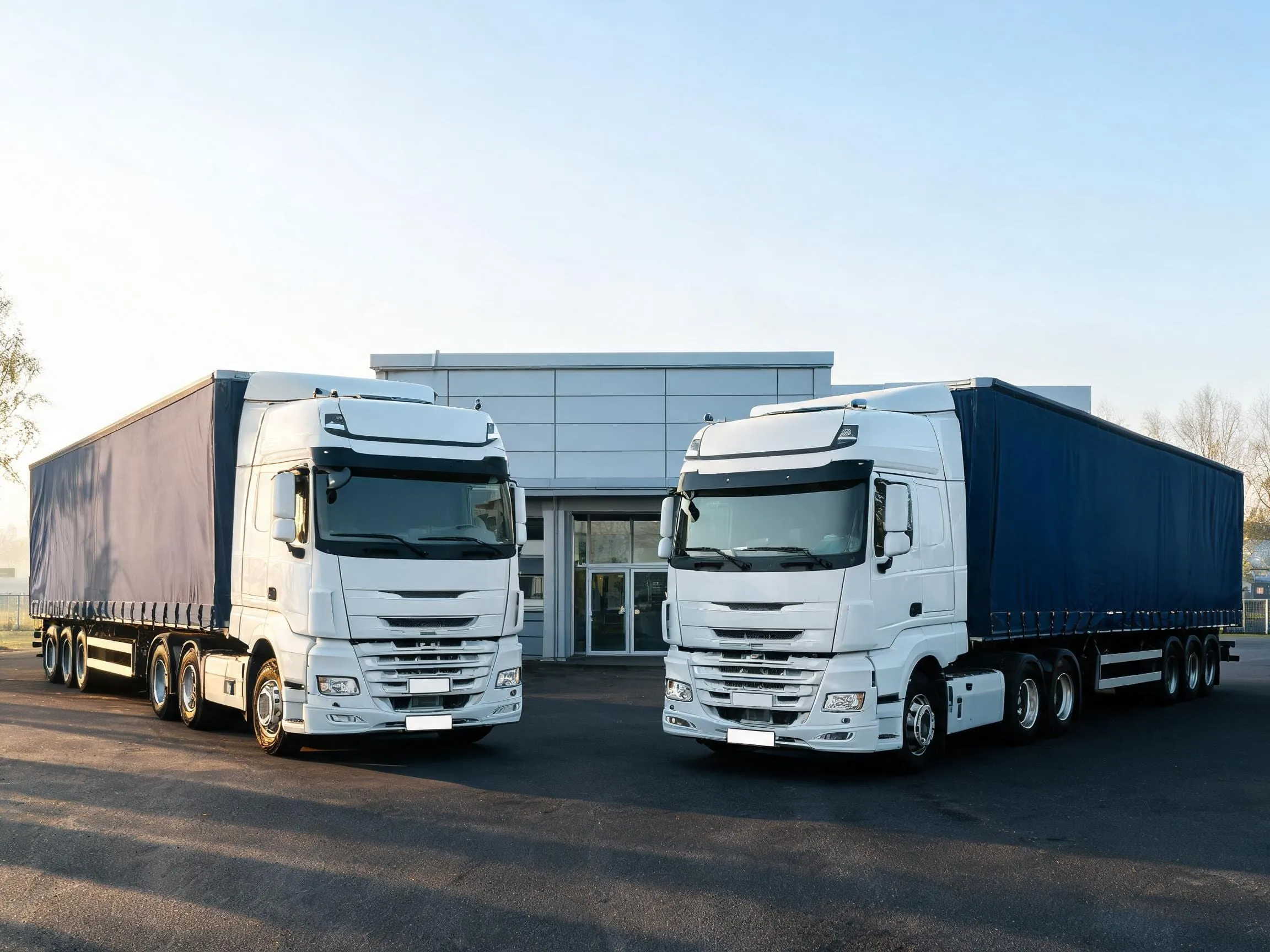
RNJ Transport can be the main or the backup forwarder on our main lanes: the Netherlands and Belgium to Lithuania and Latvia, Lithuania with Sweden and Norway, and Germany with the Baltic states. Our own 2 MAN TGX trucks with curtainsider trailers mostly run full loads between Lithuania and Sweden. Every load gets one contact person and one invoice, and we check every partner carrier before every load. Regular customers call us with next week’s volume, and we arrange all the trucks.
- The lane, the period and the price per load, with every extra line
- The volume share between the main and the backup forwarder
- The price terms: validity, diesel clause, road charges, waiting time and payment term
- The order routine: who sends the written transport order, to which address and how early
- Contacts on both sides, with a backup person for holidays
Review after the first months
Review each lane after the first months at the new prices, for example after the first quarter. Compare the loads you sent with the forecast in the lane table, the loads each forwarder took at the agreed price, and the scores from every load. Then agree any change in writing: the volume share, the forecast or a price term.
Share the numbers with each forwarder. When both sides see the same numbers, the forwarder can plan trucks for the months ahead, and the next yearly review starts from facts.
- Volume: the loads you sent on each lane against the forecast.
- Accepted loads: how many loads the main forwarder took at the agreed price, and how many went to the backup.
- Service: the scores for loading and delivery times, notice of changes and documents.
- Price terms: diesel clause changes and any road charge that changed.
- Next year: the lanes to add or drop, and the date of the next review.
Request-for-quote table for one lane
Copy the table once for each lane and fill in the last column. Send the same file to every forwarder on your list, and ask each one to answer the price lines in the same table.
| Line | What to write | Your lane |
|---|---|---|
| Loading place | Country, postcode and town | |
| Delivery place | Country, postcode and town | |
| Goods and packing | What the goods are, the packing, stackable or not, and the value per load | |
| Pallets or loading metres | Pallet type and count per load, or loading metres; full truckload or part load | |
| Weight | Gross weight per load in kg | |
| Loads and season | Loads per week or per month, and the busy and quiet months | |
| Equipment | Trailer type, for example a curtainsider, and side, rear or top loading | |
| Loading hours and slots | Opening hours, slot booking rules and the usual loading time | |
| Delivery hours and slots | Opening hours, slot booking rules and the usual unloading time | |
| Documents and customs | CMR, delivery note, customs declarations for loads outside the EU, and who prepares them | |
| Price validity | The period the price is for, and the review date | |
| Fuel terms | Fixed price, or a diesel clause with a reference price, a fuel share and a price source | |
| Toll terms | Tolls in the price or extra, and how a new toll changes the price | |
| Waiting time | Free hours at loading and delivery, and the price per extra hour | |
| Payment term | Days from the invoice date | |
| Contacts | Your contact for orders, and contacts at the loading and delivery sites |
Frequently asked questions
-
When should we run a road freight tender?
Usually before your annual agreements end. Many companies review lane prices in the fourth quarter, so the new prices start in January. Also run a review for a new lane, after a large change in volume, or when a road charge on the route changes, such as Via Toll in Lithuania from 1 January 2027. Leave time for questions, test loads and the award.
-
How many forwarders should we invite for each lane?
Usually three or four. You need at least two good offers to name a main and a backup forwarder, and more offers take longer to score with care. Invite forwarders that already run the lane. Send everyone the same pack on the same day, and give everyone the same reply date.
-
Should one forwarder price all our lanes?
No, not unless it runs all of them. Let forwarders offer on single lanes, and award each lane on its own score. One forwarder can be the main forwarder on one lane and the backup on another. Ask each forwarder which of your lanes it runs every week, and with which goods.
-
How long should a lane price stay valid?
Usually for the period you ask for, such as a calendar year, with a review date in writing. A fixed price over a long period works best with a diesel clause and a rule for new road charges. Also agree what happens when your volume differs a lot from the forecast in the lane table.
-
Is a company lane tender the same as public procurement?
No. Public bodies in the EU buy under public procurement rules based on Directive 2014/24/EU, with set procedures. A company that buys transport for its own goods sets its own rules for the tender. This guide is for such companies. A public buyer follows the procurement rules that apply to it.
-
Can RNJ Transport take part in our lane review?
Yes, for full truckloads on our main lanes: the Netherlands and Belgium to Lithuania and Latvia, Lithuania with Sweden and Norway, and Germany with the Baltic states. Send us the lane table with the route, the dates and the load size for each lane. Every load gets one contact person and one invoice, and we check every partner carrier before every load.
Sources (5)
- The markets have changed. Has your freight procurement?, Transport Intelligence (Ti), 26 March 2026
- Elektroninė kelių rinkliavos sistema „Via Toll“, „Via Lietuva“
- Vrachtwagenheffing, Rijksoverheid
- Directive 2011/7/EU of the European Parliament and of the Council of 16 February 2011 on combating late payment in commercial transactions (recast), Article 3(5)
- Directive 2014/24/EU of the European Parliament and of the Council of 26 February 2014 on public procurement and repealing Directive 2004/18/EC
We checked these sources on 24 October 2026.
Send us next year’s lanes
Email us next year’s lanes with the route, the dates and the load size for each lane. Use the request form or write to info@rnjtransport.lt. You can also call us during working hours.
+370 698 38573A person in our Klaipėda office answers your call.
Mon–Fri 08:00–17:00, Lithuanian time
Transport request
Send us an email. Please include these details:
- Loading and unloading place
- Cargo: type, pallets or loading metres, weight
- Loading date
- Company name
- Your phone number