EU packaging regulation (PPWR): pallets, film and crates from 2030

RNJ Transport moves full truckloads of palletised goods between the Benelux, Germany, the Baltic states and Scandinavia. The EU packaging regulation, Regulation (EU) 2025/40, applies from 12 August 2026. For transport packaging, the main dates come later. From 1 January 2030, companies that use pallets, crates, film and straps in the EU must meet re-use targets.
- Regulation (EU) 2025/40 on packaging and packaging waste entered into force on 11 February 2025 and applies from 12 August 2026, under Article 71. On 24 October 2026, the European Commission lists no delay.
- From 1 January 2030, under Article 29(1), companies that use pallets, crates, boxes, pallet wrappings or straps for transport in the EU must use at least 40% reusable packaging within a re-use system. From 2040, they must aim for 70%.
- From 1 January 2030, under Article 29(2) and (3), transport packaging between a company’s own sites, and deliveries to another company in the same EU country, must be 100% reusable.
- Delegated Decision (EU) 2026/429 entered into force on 26 May 2026. It exempts pallet wrappings and straps from the 100% rules in Article 29(2) and (3).
- Under Article 24, a company that fills transport packaging must keep empty space at 50% or less. The rule starts on 1 January 2030, or 3 years after the EU method is adopted, whichever is later.
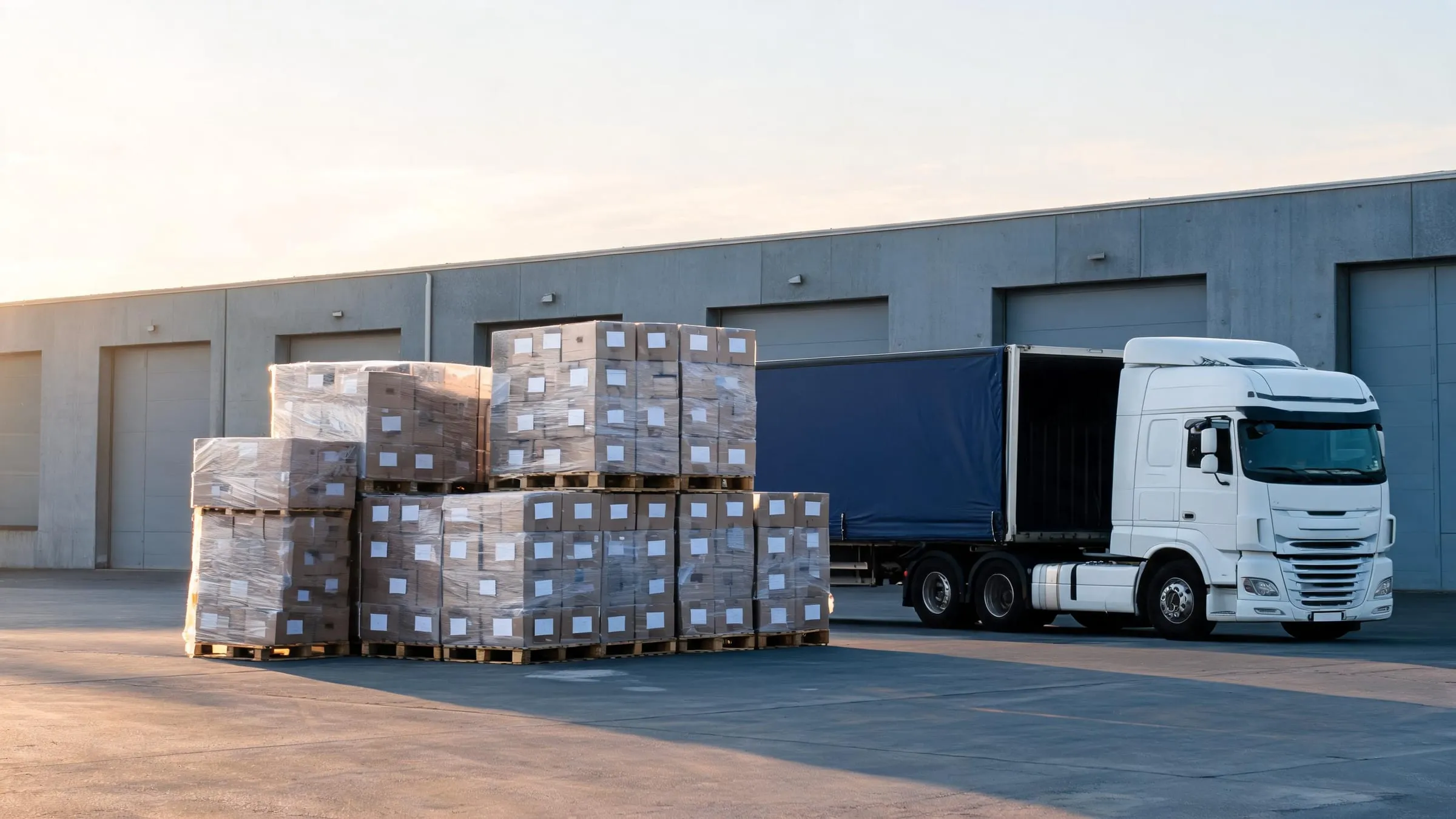
PPWR start date and legal basis
The PPWR is Regulation (EU) 2025/40 on packaging and packaging waste. The EU adopted it on 19 December 2024. The regulation entered into force on 11 February 2025 and applies from 12 August 2026. Article 71 sets both dates. As a regulation, the PPWR applies directly in every EU country and replaces the Packaging Directive 94/62/EC.
We checked for a delay on 24 October 2026. The European Commission still lists 12 August 2026 as the application date. In December 2025, the Commission proposed one change in its environmental omnibus. The proposal would suspend the duty for producers to appoint an authorised representative when they sell packaged products directly to consumers in other EU countries. The European Parliament and the Council are examining it.
Most rules for transport packaging start later than 12 August 2026. The re-use targets and the empty space limit start in 2030. Several dates depend on EU implementing acts. When the regulation says “whichever is the latest”, the rule starts on the fixed date or later, never earlier.
| Date | What happens | Legal basis |
|---|---|---|
| 11 February 2025 | The regulation enters into force | Article 71 |
| 26 May 2026 | Pallet wrappings and straps are exempt from the 100% re-use rules | Delegated Decision (EU) 2026/429 |
| 12 August 2026 | The regulation applies in all EU countries | Article 71 |
| By 30 June 2027 | The Commission adopts the method to calculate the re-use targets | Article 30(3) |
| By 12 February 2028 | The Commission adopts the method to calculate empty space | Article 24(2) |
| 12 February 2029 at the earliest | Reusable packaging carries a label and a QR code | Article 12(2) |
| 1 January 2030 | Re-use targets for pallets, crates, boxes, film and straps start | Article 29(1) to (3) |
| 1 January 2030 at the earliest | Empty space in transport packaging is 50% or less | Article 24(1) |
| 1 January 2040 | Companies aim for 70% reusable transport packaging | Article 29(1) |
Re-use targets for pallets, crates, film and straps
Article 29 sets three re-use rules for transport packaging from 1 January 2030. Across all transport inside the EU, at least 40% of a company’s transport packaging must be reusable within a re-use system. Between its own sites, and for deliveries to another company in the same EU country, all of it must be reusable.
PPWR re-use targets
Reusable pallets, crates and film from 1 January 2030
Article 29 of Regulation (EU) 2025/40 sets re-use targets for transport packaging used inside the EU.
40%
All EU transport, from 2030
100%
Own sites or one country
70%
Aim from 2040
-
26 May 2026
Wrappings and straps exempt from the 100% rules
-
12 Aug 2026
The regulation applies in all EU countries
-
30 Jun 2027
Deadline for the EU calculation method
-
1 Jan 2030
Re-use targets start
-
1 Jan 2040
Aim of 70% reusable packaging
Delegated Decision (EU) 2026/429 exempts pallet wrappings and straps from the 100% rules only. It does not name the 40% target.
The rules name the packaging: pallets, foldable plastic boxes, boxes, trays, plastic crates, intermediate bulk containers, pails, drums and canisters of any size or material. They also name pallet wrappings and straps that hold and protect products on pallets during transport. A re-use system is the set of arrangements and incentives that brings the packaging back for its next use.
The targets fall on the company that uses the transport packaging. The Commission guidance of 5 June 2026 names the company that places a product on the EU market in that packaging, as a manufacturer, importer or distributor. The company counts the packaging it used in each calendar year. The first report covers 2030 and goes to the national authority within 6 months after the year ends.
Proof of the targets follows Article 30(4). It starts on 1 January 2030, or 18 months after the Commission’s calculation method enters into force, whichever is later. The Commission must adopt that method by 30 June 2027.
- All transport inside the EU, Article 29(1): at least 40% of the listed packaging in total is reusable from 2030. The aim from 2040 is 70%.
- Between your own sites, or sites of linked or partner companies in the EU, Article 29(2): the listed packaging is reusable from 2030.
- Deliveries to another company in the same EU country, Article 29(3): the listed packaging is reusable from 2030.
- Goods from outside the EU: the Commission guidance says the targets apply after import, from the first warehouse in the EU.
Which re-use rule fits your load
The rule depends on who sends the goods, who receives them and where. A load between two companies in two EU countries falls under the 40% target in Article 29(1). A load between your own sites, or within one EU country, falls under the 100% rules. RNJ Transport moves loads on routes where each of these cases happens.
The table reads the wording of Article 29 for typical loads on our routes. It is a guide to the questions, not legal advice. Your packaging supplier and the national authority in your country can confirm which rule applies to your loads and from which date.
| Load | Rule from 1 January 2030 | Pallet wrappings and straps |
|---|---|---|
| A Dutch supplier sends goods to a customer in Lithuania | Article 29(1): at least 40% reusable in total | The 2026 decision covers only the 100% rules. Ask your supplier how the 40% target treats them. |
| A German plant sends goods to its own warehouse in Latvia | Article 29(2): 100% reusable | Exempt from the 100% rule since 26 May 2026 |
| A factory in Klaipėda delivers to a customer in Vilnius | Article 29(3): 100% reusable | Exempt from the 100% rule since 26 May 2026 |
| Goods from outside the EU go from a Belgian warehouse to Estonia | The targets apply from the first warehouse in the EU, says the Commission guidance | Same rules as for loads inside the EU |
| A Lithuanian company sends goods to Norway | Norway is not an EU country. The regulation is marked as text with EEA relevance. | Ask the Norwegian authority which rules apply and from when |
Exemptions for wrappings, straps and other transport packaging
Pallet wrappings and straps have their own exemption. Delegated Decision (EU) 2026/429 of 25 February 2026 exempts them from the 100% re-use rules in Article 29(2) and (3). The Official Journal published the decision on 6 May 2026, and it entered into force on 26 May 2026. The Commission says a full switch would need large investments in packaging lines.
Article 29(4) lists four more cases where the re-use targets do not apply. Article 29(13) adds a size rule for the smallest companies. A national authority can also grant a 5-year exemption under Article 29(14), when the country meets set recycling and waste targets and the company has a waste prevention and recycling plan.
- Packaging for dangerous goods under Directive 2008/68/EC. RNJ Transport does not carry dangerous goods (ADR).
- Packaging made to order for large machinery, equipment and goods. The Commission guidance asks for proof in the packaging’s technical documentation.
- Flexible packaging in direct contact with food, feed or food ingredients during transport.
- Cardboard boxes.
- Micro-enterprises that made no more than 1,000 kg of packaging available in an EU country in the calendar year.
Empty space, labels and recycled content
Article 24 limits empty space in grouped, transport and e-commerce packaging to 50%. The company that fills the packaging is responsible. The limit starts on 1 January 2030, or 3 years after the EU calculation method enters into force, whichever is later. The Commission must adopt that method by 12 February 2028. Reusable packaging within a re-use system is exempt.
Empty space is the volume of the outer packaging minus the volume of the sales packaging inside. Filling materials count as empty space. Article 24 names paper cuttings, air cushions, bubble wrap, foam fillers, wood wool and polystyrene chips. The method will take into account fragile goods, irregular shapes and the space needed for shipping labels.
The sorting label on material composition does not apply to transport packaging, except e-commerce packaging, under Article 12(1). Reusable packaging needs a label and a QR code from 12 February 2029 at the earliest, under Article 12(2). Open loop systems without a system operator are exempt. The Commission guidance says reusable transport packaging placed on the market before 11 February 2025 can stay in use until it wears out.
Article 7 sets minimum recycled plastic content for the plastic part of packaging. For most plastic packaging, the minimum is 35% from 1 January 2030, or 3 years after the EU method, whichever is later. From 1 January 2040, it is 65%. Annex II lists stretch films and plastic crates and pallets among the packaging categories. The manufacturer or importer of the packaging proves compliance.
Packaging questions before your next contract
Start with the packaging you use today. List your pallets, crates, film and straps, and the share that comes back for re-use. Then ask your packaging supplier how each item fits the 2030 rules. RNJ Transport does not sell packaging or pallets. We plan the truck around the pallets and the load you prepare.
Re-use adds a return trip for the packaging. Under Article 27, reusable packaging is reconditioned before its next use, and in a closed loop system it goes back to a collection point. Plan who returns the pallets and crates, how often and on which route. Reusable straps or wraps must still hold the load during the trip. Our load securing guide explains the rules for that.
When you book a load with us, tell us the pallet type, the number of pallets and how they are wrapped. One contact person at RNJ Transport handles your load, and you get one invoice. The euro pallet guide gives the sizes and how many pallets fit in a truck.
-
List your transport packaging
Count pallets, crates, boxes, film and straps per year and per route.
-
Sort your loads by rule
Own sites, one country or two countries. Each case has its own rule in Article 29.
-
Ask your packaging supplier
Ask which items are reusable within a re-use system, and what proof the supplier gives.
-
Plan the return trips
Agree who brings reusable pallets and crates back, how often and on which route.
-
Check with the authority
The national authority confirms exemptions, reports and dates for your company.
Checklist: questions for your packaging supplier
Use these questions when you talk to your packaging supplier about the 2030 rules. The answers show what changes for your loads. Confirm the rules for your company with the national authority.
| Question | Why it matters |
|---|---|
| Which of our pallets, crates and boxes count as reusable packaging? | Article 11 sets the conditions, such as many rotations and reconditioning. |
| Which re-use system do they belong to, and who runs it? | The targets count only reusable packaging within a re-use system. |
| Do you offer reusable wraps or straps, and for which loads? | Since 26 May 2026, wrappings and straps are exempt from the 100% rules only. |
| How much recycled plastic is in our stretch film? | Article 7 sets 35% for most plastic packaging from 2030 at the earliest. |
| How will we report our re-use numbers for 2030? | The first report covers 2030 and goes to the national authority within 6 months. |
Frequently asked questions
-
When does the EU packaging regulation apply?
From 12 August 2026. Regulation (EU) 2025/40 entered into force on 11 February 2025, and Article 71 makes it apply from 12 August 2026 in every EU country. Many rules start later. The re-use targets for transport packaging start on 1 January 2030. The empty space limit starts on 1 January 2030 at the earliest.
-
Was the PPWR delayed?
No. On 24 October 2026, the European Commission lists 12 August 2026 as the application date. Its December 2025 omnibus proposal would suspend one duty: appointing an authorised representative when selling packaged products directly to consumers in other EU countries. The European Parliament and the Council are examining that proposal. The proposal does not change the transport packaging dates.
-
Do all pallets have to be reusable from 2030?
Not in every case. For transport inside the EU, at least 40% of the listed packaging in total must be reusable within a re-use system from 1 January 2030. For transport between your own sites, and for deliveries to another company in the same EU country, the listed packaging must be reusable. Ask your packaging supplier which rule fits your loads.
-
Is stretch film exempt from the re-use targets?
Partly. Delegated Decision (EU) 2026/429 exempts pallet wrappings and straps from the 100% re-use rules in Article 29(2) and (3) since 26 May 2026. The decision does not name the 40% target in Article 29(1). Check with your packaging supplier or the national authority how your film counts.
-
Who must meet the re-use targets for transport packaging?
The company that uses the packaging. The Commission guidance of 5 June 2026 names the company that places a product on the EU market in transport packaging, as a manufacturer, importer or distributor. That company counts its packaging each calendar year and reports to the national authority. Micro-enterprises with no more than 1,000 kg of packaging in an EU country are exempt.
-
Does the 50% empty space limit apply to a pallet load?
Not yet. The limit covers transport packaging that a company fills, from 1 January 2030 at the earliest. The EU calculation method is due by 12 February 2028, and the rule starts 3 years after it enters into force if that is later. Filling materials such as air cushions and bubble wrap count as empty space. Reusable packaging within a re-use system is exempt.
Sources (5)
- Regulation (EU) 2025/40 of the European Parliament and of the Council of 19 December 2024 on packaging and packaging waste, amending Regulation (EU) 2019/1020 and Directive (EU) 2019/904, and repealing Directive 94/62/EC
- Commission Delegated Decision (EU) 2026/429 of 25 February 2026 on supplementing Regulation (EU) 2025/40 of the European Parliament and of the Council by exempting certain economic operators that use pallet wrappings and straps from the 100% reuse requirements of these packaging formats
- Commission Notice C(2026) 3702 of 5 June 2026: Guidance document for Regulation (EU) 2025/40 on packaging and packaging waste
- Packaging waste, European Commission, Directorate-General for Environment
- EUR-Lex: Regulation (EU) 2025/40, document information, amendments and proposals
We checked these sources on 24 October 2026. This post is general information, not legal advice.
Plan your next pallet load
Send the route, the date and the load size in the request form. We call you back. You can also call us during working hours. Tell us the pallet type and how the pallets are wrapped.
+370 698 38573A person in our Klaipėda office answers your call.
Mon–Fri 08:00–17:00, Lithuanian time
Transport request
Send us an email. Please include these details:
- Loading and unloading place
- Cargo: type, pallets or loading metres, weight
- Loading date
- Company name
- Your phone number